January 6, 2026
Stump grinding is an essential service for maintaining both the aesthetics and safety of a property's landscape. Utilizing professional stump removal solutions ensures that leftover tree stumps are addressed efficiently, minimizing disruption to the surrounding area while preserving curb appeal and site usability. Selecting a qualified provider for this type of work is a critical decision that affects safety, soil condition, and long-term landscape plans.
Property owners often underestimate the impact a remaining stump can have until it becomes a visible eyesore or a physical hazard. Beyond visual concerns, exposed stumps can attract pests, interfere with lawn maintenance, and pose tripping risks. Addressing these issues early helps maintain a safer outdoor environment and supports future landscaping improvements.
Selecting a professional stump grinding service requires evaluating experience, equipment quality, and overall service reliability. Understanding what distinguishes high-quality workmanship from basic removal is essential when making an informed decision. This article outlines what property owners should expect from a dependable stump grinding service and how professional practices contribute to better outcomes.
Understanding Stump Grinding
Stump grinding is a specialized method used to reduce a tree stump to below ground level using mechanical equipment. Rather than extracting the entire root system, this approach focuses on grinding the visible stump into small wood chips. This method is commonly chosen because it limits soil disturbance and allows the surrounding landscape to remain intact.
The process begins with a careful inspection of the stump and surrounding area. Technicians evaluate size, species, root spread, and proximity to utilities or structures. Once prepared, the grinding equipment is positioned over the stump and gradually reduces it to a depth suitable for landscaping or turf installation. According to RHS, shallow grinding from 20-25cm below ground level is normally sufficient for laying turf over.
After the grinding process is complete, the area can be restored for lawn growth, garden beds, or hardscape features. Grinding typically leaves roots underground to decompose naturally, which supports soil health while avoiding the disruption caused by full excavation.
Equipment and Safety Practices
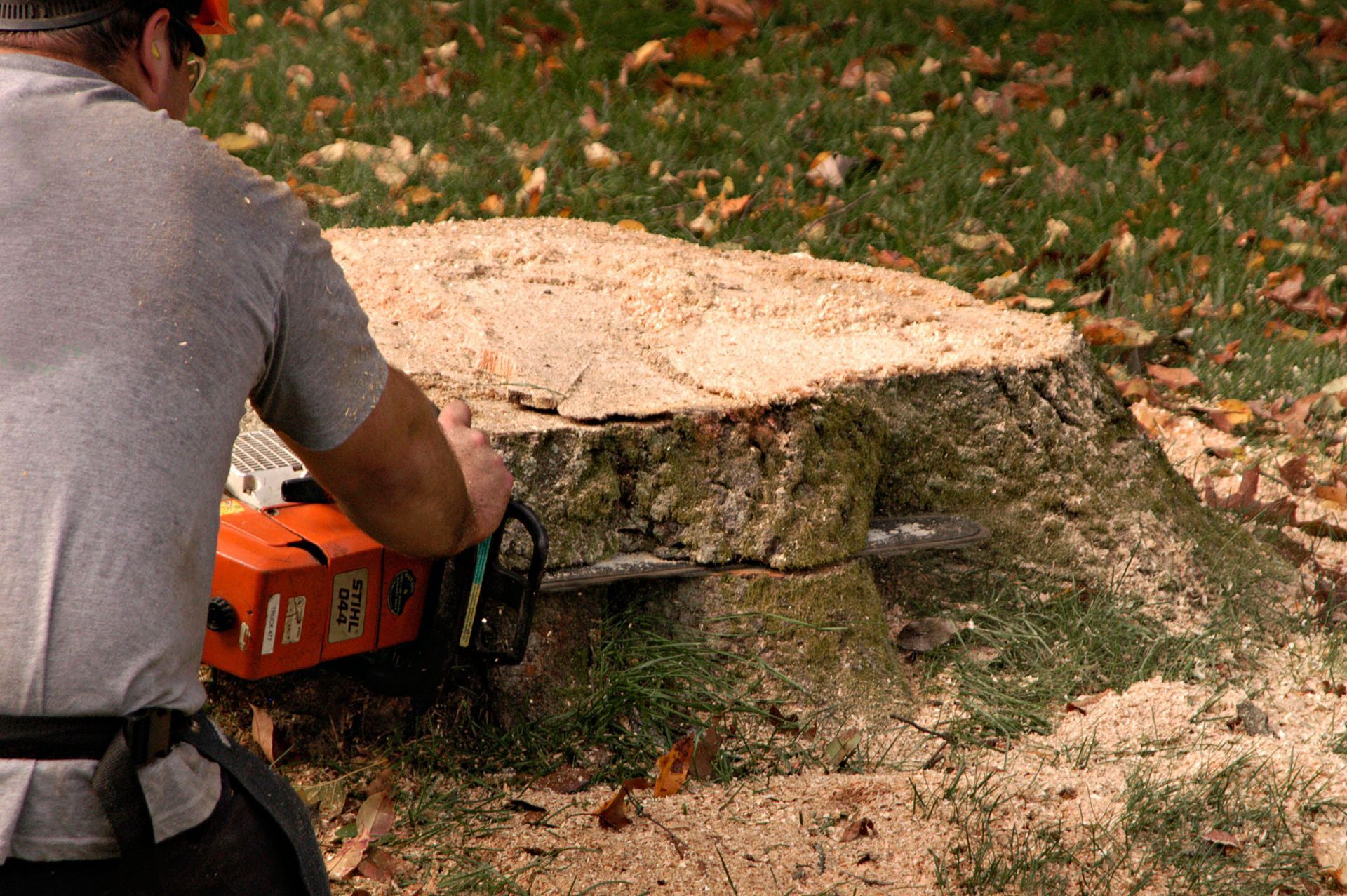
A professional stump grinding service relies on purpose-built machinery designed to handle a variety of stump sizes and site conditions. These machines use high-speed cutting wheels to efficiently break wood into mulch while maintaining controlled operation. Equipment selection depends on stump diameter, terrain, and site accessibility.
Modern grinding equipment includes maneuverable designs that allow operators to work near fences, structures, and uneven ground with minimal impact. Proper maintenance and calibration of equipment contribute directly to performance quality and job safety.
Safety is a core consideration during every project. Operators wear protective gear and follow established protocols to prevent debris hazards and equipment-related injuries. Adhering to safety standards protects both workers and property owners while ensuring consistent results.
Grinding Versus Full Removal
Stump grinding differs significantly from complete stump removal. Grinding focuses on reducing the visible stump below soil level, while removal extracts the entire root mass. Grinding is generally faster, less invasive, and more cost-effective for most residential and commercial properties.
Because roots are left underground, grinding allows soil structure to remain stable. This makes it suitable for lawns, gardens, and areas where minimal disruption is preferred. The decomposing roots gradually enrich the soil without causing surface instability.
Complete removal may be required when stumps interfere with construction or foundation work. However, for general landscape maintenance, grinding provides a practical balance between effectiveness and environmental preservation.
Environmental and Sustainability Considerations
Stump grinding supports environmentally responsible property maintenance by minimizing soil disturbance and reducing waste. The wood chips produced during grinding can be reused as mulch, helping retain soil moisture and reduce erosion.
Leaving roots in place allows natural decomposition, which supports microorganisms and beneficial fungi within the soil. This process contributes to nutrient cycling and helps maintain long-term soil vitality.
By avoiding large excavation, stump grinding reduces the need for hauling debris off-site. This approach aligns with sustainable landscaping practices and limits unnecessary landfill contributions.
Qualities of a Professional Stump Grinding Service
A reputable stump grinding service is defined by trained personnel who understand both equipment operation and site-specific challenges. Experience allows technicians to adapt techniques to varying stump sizes, tree species, and terrain conditions.
Skilled operators prioritize efficiency without sacrificing safety. Their familiarity with equipment controls and cutting techniques ensures consistent depth and smooth surface preparation for post-service landscaping.
Experienced providers also offer accurate assessments and realistic timelines. Their expertise enables them to identify potential complications early and recommend appropriate solutions.
Certification, Insurance, and Reliability
Working with an insured and certified provider protects both the property owner and the service team. Certification demonstrates adherence to industry safety and operational standards.
Insurance coverage safeguards against accidental damage or unforeseen incidents during the grinding process. Verifying insurance status is an essential step when choosing a stump grinding service for residential or commercial projects.
Reliable providers are transparent about credentials, pricing, and procedures. This professionalism reflects a commitment to accountability and client confidence.
Service Scope and Client Support
A high-quality stump grinding service often offers more than basic grinding. Comprehensive solutions may include site evaluation, debris management, and surface leveling following completion.
Some providers also offer guidance on soil restoration or lawn reestablishment. These additional insights help property owners maximize the value of the service and achieve long-term landscape goals.
Ongoing communication before and after service contributes to client satisfaction. Clear explanations and responsive support reinforce trust throughout the project lifecycle.
Pre-Service Evaluation and Planning
Effective stump grinding begins with a detailed site evaluation. Identifying underground utilities, nearby structures, and access limitations ensures safe and efficient execution.
During planning, providers assess stump size, wood density, and terrain conditions to determine equipment requirements. Proper planning reduces delays and prevents unnecessary complications.
Collaborating with clients during this phase helps align expectations and ensures the finished result supports future landscaping plans.
Execution and Final Results
During execution, operators follow precise grinding patterns to achieve consistent depth and surface uniformity. Controlled movements allow the grinder to reduce the stump efficiently while maintaining surrounding ground stability.
Quality control throughout the process ensures the stump is ground to the agreed-upon depth. This precision supports immediate use of the area for turf, planting, or hardscaping.
Post-Grinding Site Restoration Options
After stump grinding is completed, property owners can choose from several restoration options depending on future use of the area. Wood chips generated during grinding may be left in place temporarily to settle the soil or removed entirely if immediate landscaping is planned.
Many sites benefit from added topsoil to level the ground and support new grass or plantings. Proper grading ensures water drains correctly and prevents low spots from forming over time.
Professional guidance during this phase helps property owners select the most effective restoration approach. Thoughtful post-grinding preparation ensures the area blends naturally with the surrounding landscape and remains functional long term.
Long-Term Landscape Benefits
Removing visible stumps through grinding provides lasting advantages for property maintenance and usability. Open ground allows for uninterrupted mowing, safer foot traffic, and greater flexibility in landscape design.
Over time, decomposing roots improve soil composition by adding organic material below the surface. This natural process supports healthier plant growth without compromising ground stability.
By eliminating obstacles and improving soil conditions, stump grinding contributes to a cleaner, more adaptable outdoor space. These long-term benefits make professional grinding a valuable investment for ongoing property care.
A professional stump service concludes with site cleanup and final inspection. Proper completion leaves the area safe, functional, and ready for the next phase of property improvement. Contact our team at Green Holly Arborists today and learn more about our arborist services.